ISI Facilitator Training · May 2026 cohort full · Wait list open
Double your
client’s results.
Twelve months. Six to twelve practitioners. The full teaching of Integrated Somatic Inquiry, adaptable to any modality you’re already using. Get clients out of rumination twice as fast. Learn how to help your clients resolve their chronic symptoms at the root. Build a business by leading with results.
May 2026 cohort is full. Next cohort: 2027 — unless the wait list reaches 50, which opens an earlier 2026 cohort. Tuition: $10,000 paid in full · or 12 × $850/mo.
Cohort 2 Wait List
…
At 50, an earlier 2026 cohort opens
The Promise
Most healing modalities are missing an evidence-based root cause healing approach.
ISI is not a technique. It is an understanding of how an unconscious identity produces a symptom or a behavior adaptation that always comes with rumination.
Understand how physical symptoms, behavior adaptations, and rumination are all connected to one core identity.
Over the 12 months you’ll learn how to dissolve these identities that we pick up from our trauma by going through your own resolution first. Then you bring reviews of your client sessions, your own blind spots, or even your clients onto our calls, and we go through it together.
The result: clients out of rumination twice as fast. Symptoms that actually resolve. A practice that fills itself by word of mouth.

What gets in the way
Three problems
we solve directly.
These are the three places every practitioner gets stuck. The training is built to take all three off the table by the time you finish phase two.
Problem 01
Dead ends in the session.
The client says “I know this intellectually, but I still don’t feel any different.” You’re circling. You can sense something is there, but you don’t know where to go.
How we resolve it
You bring the dead end to the live calls. We identify where their body and psyche are still disassociated and why. You learn reverse inquiry, which is a way to test your clients using the body as a lie detector, and how to bypass the conscious mind so the unconscious can answer.
Problem 02
Your own blind spots.
What keeps your clients from resolving is almost always something that’s still alive in you. If part of you agrees with their story, you can’t lead them out of it.
How we resolve it
Three full session reviews. You record a session with a client. We watch it together, minute by minute. We name where you stopped listening, where you were trying to fix, where your context was running the room.
Problem 03
Patterns that repeat with a little improvement.
The client gets some relief. Then they come back next month with the same theme in a slightly different costume. You suspect the work is surface, but you can’t name what’s missing.
How we resolve it
You learn to see what the unconscious is still using the pattern for. This is called utility, meaning the client doesn’t want to heal for a reason typically unknown to them. You will learn how to guide the client to see that they don’t need the thing that is causing them suffering. And then it will dissolve.
The Year
May to May. Three phases. One retreat.
The cadence is three weeks on, one week off. Two-hour live calls. Roughly thirty-six sessions across the year, plus a four-day retreat in Scotland between phase two and phase three.
Phase 01 · Months 1–5
Initiation.
Your own resolution comes first. We do an inventory together. Where are the patterns on repeat. Where is the body still saying no. What identity is each symptom still defending.
You learn the body as lie detector. You learn the inquiry sequence on yourself, with me leading, until you can take yourself through it alone. The single most valuable thing you can do for your clients is resolve in yourself what they’re carrying.

Phase 02 · Months 6–9
Sharpening
the sword.
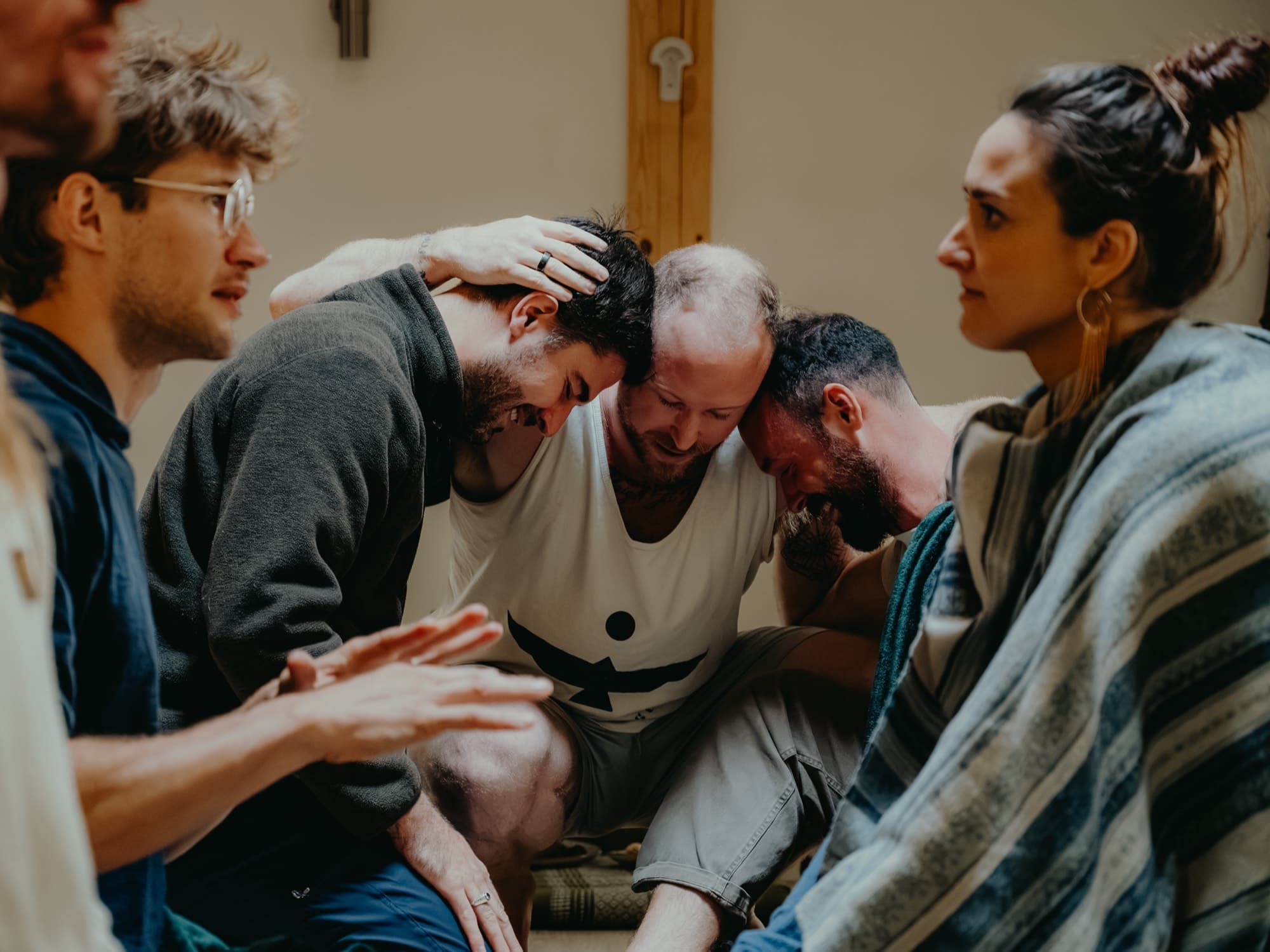
You start bringing the work to your clients. You record sessions and bring them back to the group. We review them together. You also lead inquiry with each other in the calls, with me stepping in when you hit a wall.
This is where the “Golden Sessions” case study library earns its keep. You watch real resolutions unfold. You see how I approach a client when I have no context, and how the lack of context is sometimes the asset.
Retreat · Mid-cohort
Four days.
Location TBD.
Somewhere warm, probably. ;)
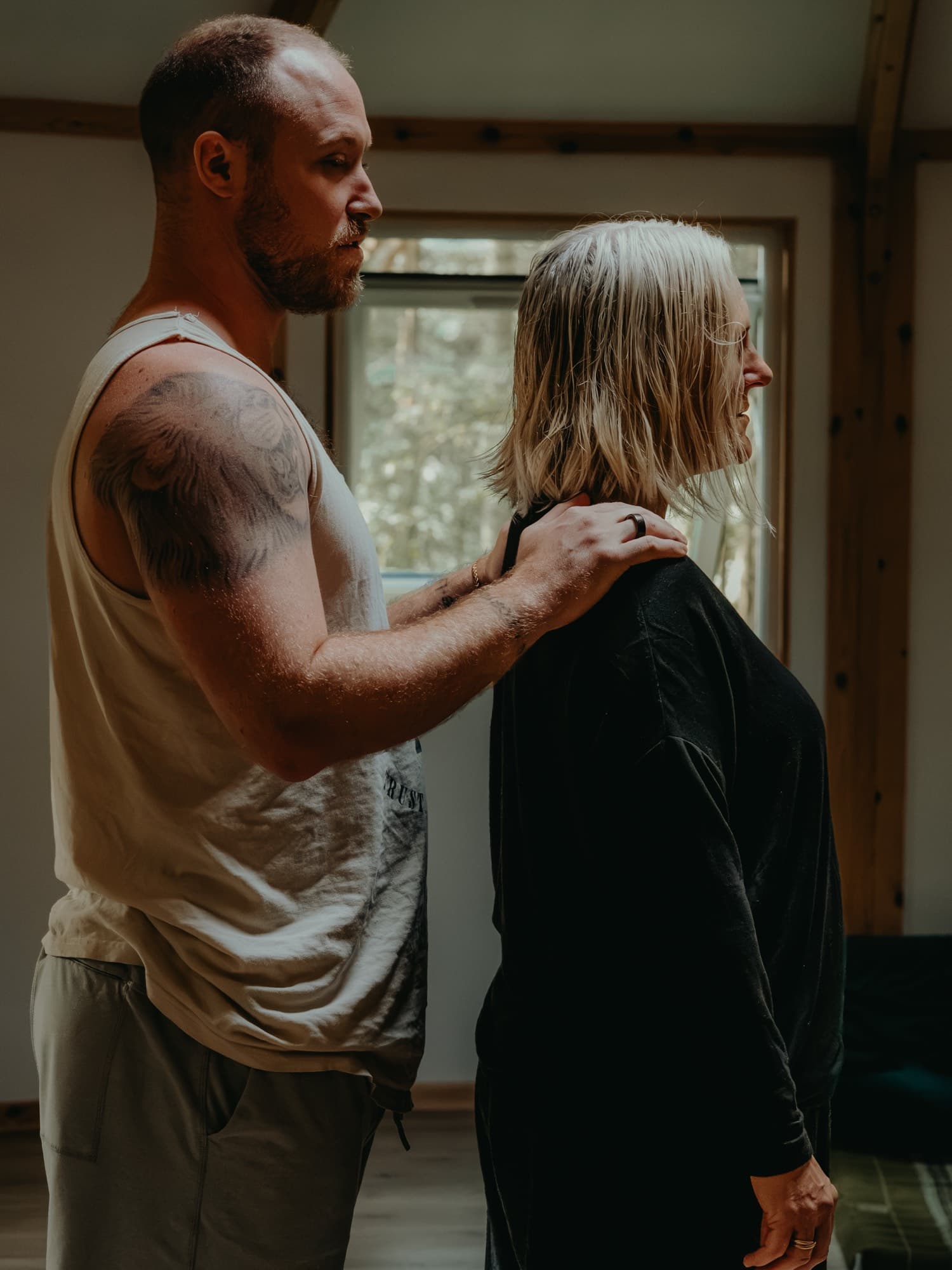
A four-day retreat is like a hundred sessions in four days. There’s no screen to hide behind. The exercises are designed to surface your remaining context, and the synchronicity of who shows up almost always means someone in the room is your ex, your father, your mother in costume.
Lifelong relationships get built here. So does the kind of clarity about your own work that you can’t get over Zoom.
The retreat location for the next cohort is not yet determined — but if I get to choose (and I do), it’ll likely be somewhere warm.
Phase 03 · Months 10–12
Integration.
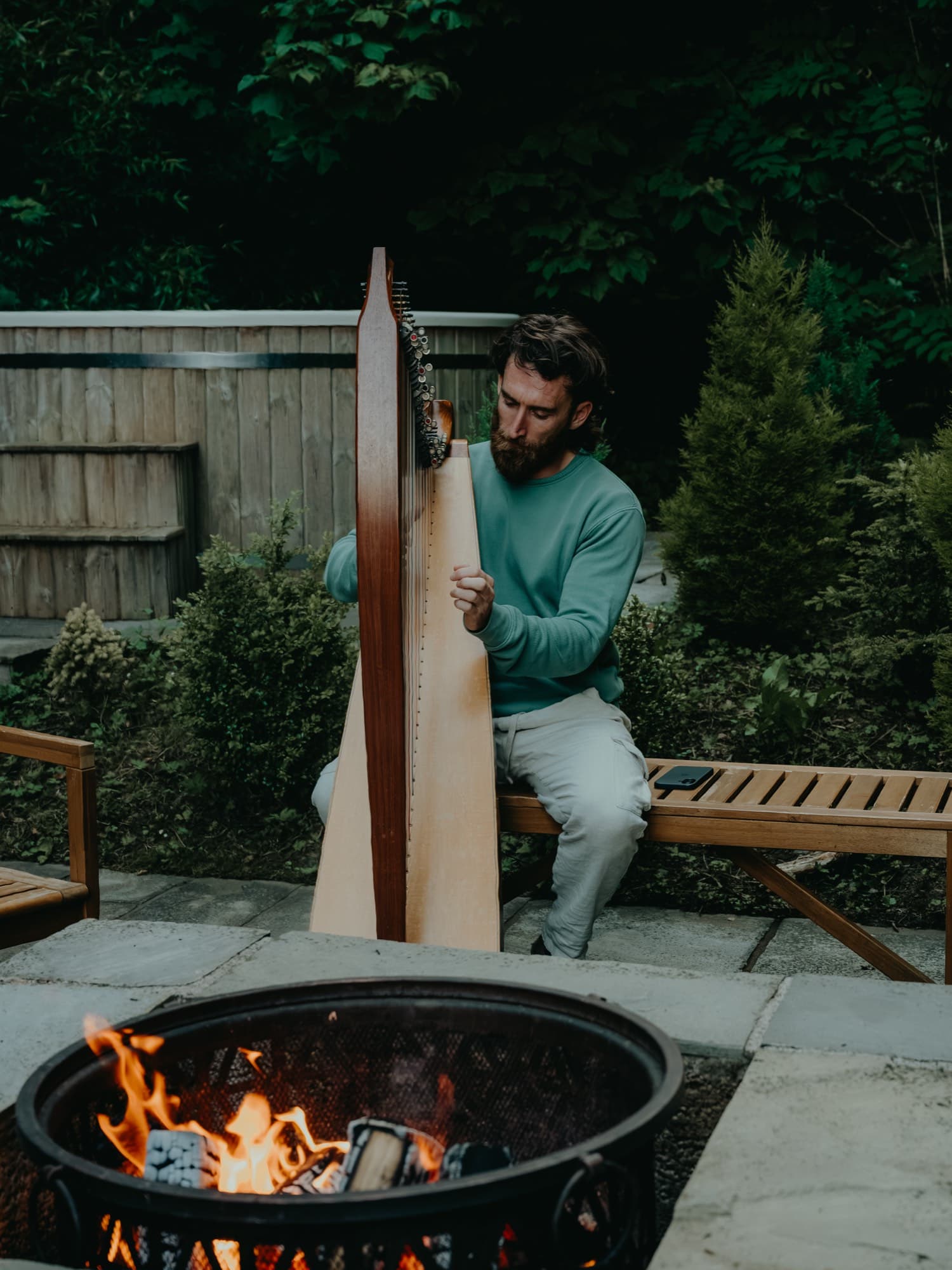
The final three months are individualized. We design them based on what you actually need. For some, that’s business application: how to fill a practice, how to share results, how to charge what the work is worth. For others it’s deeper relational work, or refining a specific kind of session.
We do not end with the retreat. The integration phase is what makes the work hold.
What you receive
Everything I’ve built
for this work.
The container is the curriculum. The curriculum is also the container. Both are listed below.
Live Group Calls
Roughly thirty-six two-hour sessions across the year. Three weeks on, one week off. Inquiry, teaching, live client review, group ISI work.
Six 1-on-1 Sessions
Six 90-minute private sessions with Brandon. Use them when something urgent is alive. The recommendation is to space them through the year.
Four-Day Retreat
In-person in Scotland, January. Travel and lodging not included. Tuition covers the retreat itself.
Three Client Session Reviews
Record a session with a client (with their permission). We watch it together. We name what’s working, what isn’t, where your blind spots are showing.
Golden Sessions Library
A growing archive of recorded resolutions, organized by conflict theme. The fastest way I learned this work was watching other practitioners do it. You get the same.
Telegram Cohort + Accountability App
Voice notes, questions, and unlimited support between calls. A tracking app that captures your reporting commitments and shows the cohort’s consistency at a glance.
Who this is for
For practitioners and
aspiring practitioners.
Most of the curriculum is designed for people already doing client work. Coaches, therapists, healing practitioners, GNM consultants.
Some seats are open to people who are not yet practicing but feel the call. If that’s you, the application call will tell us whether the timing is right.
This round is the groundwork for becoming an accredited certified course. Your progress will be tracked meticulously on a weekly basis, so I can create real statistics and success stories backed by data — which means it will be a very high-touch, high-accountability space.
You’ll fit if
- ·You already work with clients and feel the limits of the modality you were trained in.
- ·You value living what you teach and know that it’s what develops conviction.
- ·You can show up to live calls. Six absences across the year is the cap. If you miss more than six, you have to buy back in.
- ·You want results, not credentials. The best certificate is your client’s testimony.
Logistics
What you’re committing to.
Format
Twelve months. Live group calls, three weeks on, one week off. Two hours per call. Recordings if you must miss.
Cohort Size
Six to twelve seats. Small enough that I know your client work by name.
Next Cohort
May 2026 cohort is full. Next: 2027 — or earlier in 2026 if the wait list reaches 50.
Tuition
$10,000 paid in full. Or 12 × $850/mo. Other payment plans available on the call. $500 deposit holds your seat after acceptance.
Process
Apply. Thirty-minute call with Brandon. Acceptance. Deposit. Welcome to the cohort.
Six-Month Resolution Promise
If at six months you’ve attended the calls, done the work, and have not seen at least a fifty-percent shift in what you came to resolve, I refund the full tuition. The criteria are honest. So is the promise.
The Stack
What you’re getting,
and what it’s worth.
Priced honestly. Each piece carries its own weight on the open market. The full container is built for one outcome: you become a practitioner who produces results clients will tell other people about.
36 Live Group Calls · 12 months
Three weeks on, one week off. Two-hour sessions of inquiry, teaching, and live client review with me holding the room.
$5,000
value
Six 90-Minute 1-on-1 Sessions with Brandon
Private inquiry sessions to use across the year for whatever’s most alive. The deepest 1-on-1 access I offer at any tier.
$3,000
value
Four-Day In-Person Retreat
Stay, food, and local transport included. A hundred sessions in four days. The synchronicity of who shows up does most of the work.
$3,000
value
Three Recorded Client Session Reviews
Record a session with a client. We watch it together, minute by minute. We name where you stopped listening, where context was running the room, and what to do differently.
$1,500
value
Golden Sessions Library
A growing archive of recorded resolutions, organized by conflict theme. The fastest way I learned this work was watching it. You get the same.
$750
value
Telegram Cohort + Accountability App
I’m active in the Telegram five days a week. The accountability app captures your reporting commitments and shows the cohort’s consistency at a glance.
$750
value
Certification + Referral Directory
This cohort’s tracked results support formal accreditation. Graduates are added to the certified ISI Facilitator directory — where I send the clients I no longer take 1-on-1.
$1,000
value
Total Value
Everything above, fully delivered.
$15,000
What It’s Worth
$15,000
What this would cost piecemeal on the open market.
Your Tuition
$10,000
Or 12 × $850/mo. Custom payment plans available on the call.
$500 deposit holds your seat after acceptance · Six-month resolution promise applies to every tier
The room is small
May 2026 is full. Get on the list for the next one.
The next cohort is 2027 — unless the wait list reaches 50 and an earlier 2026 cohort opens. Either way, your spot in the queue determines which room you’re invited to.
Cohort 2 Wait List
…
At 50, an earlier 2026 cohort opens
The May 2026 cohort filled in two weeks. The wait list is filling now.